Meta-Analysis Confirms

Waterford Raises Student Achievement in Both Reading and Math

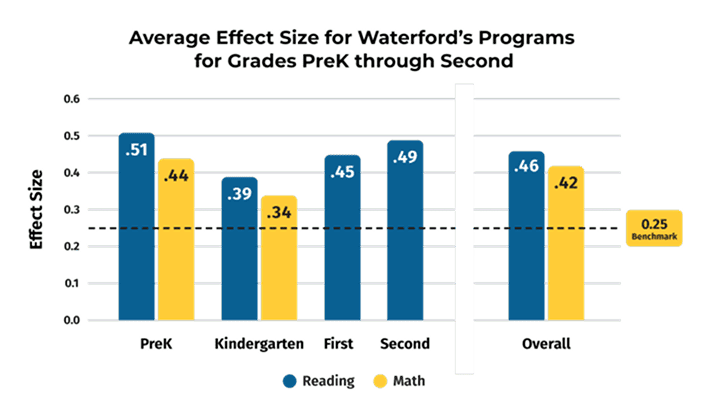
Children using Waterford consistently achieve more than a year of growth beyond expectations. Through engaging books, characters, songs, and interactive activities, children build literacy and math skills that last.

Evidence and Research

PreK students who participated in Nevada’s UPSTART program had strong early literacy and math outcomes. The program’s effects were large enough to have a substantive impact on children’s learning and development, with a 42% return on investment. Benefits were similar for dual‑language and monolingual learners.

Children in Indiana who were randomly assigned to use a 15‑minute‑a‑day computer‑adaptive reading program ended kindergarten with stronger reading scores than peers receiving only teacher‑led instruction. Higher scores were observed across all backgrounds, indicating that adding adaptive technology can give young learners extra support in learning to read.

Children using UPSTART’s reading software scored higher in letter knowledge and phonological awareness than those using math software, even after accounting for prior skills and district differences. The study shows that computer‑based early literacy instruction can effectively strengthen foundational reading skills for rural preschoolers.

PreK children across five states who used Waterford’s computer‑assisted literacy program scored significantly higher overall and in blending, letter sounds, and letter recognition subskills than peers using the math/science program. Benefits extended across demographic groups, including multilingual learners and children experiencing poverty, showing CAI’s potential to strengthen early literacy skills.

Children in South Dakota and Wyoming who used Waterford’s computer‑assisted literacy program during the summer before kindergarten scored higher in overall literacy—especially blending and letter recognition—than peers using the math/science program. Benefits held for children experiencing poverty and for students of color, showing strong, equitable summer learning gains.

Rural preschoolers who used Waterford Upstart’s Summer Learning Path before kindergarten scored significantly higher on measures of early math skills. The adaptive, at‑home program helped address limited early‑education access and pandemic disruptions. Results show technology‑based summer learning can strengthen school‑readiness math skills for rural children.

Nevada preschoolers randomly assigned to the Upstart math program scored higher in math concepts and applications than those randomly assigned to the reading program, both after PreK and again in kindergarten. Multilingual and non-multilingual learners benefited equally. Results show early, at‑home, technology‑based math instruction can strengthen school‑readiness skills.

Preschoolers in rural Utah who were randomly assigned to use a computer‑adaptive reading program scored higher in overall literacy and across multiple reading skills than peers assigned to use a math/science program. Benefits held across all demographic groups, showing computer‑assisted instruction can strengthen early literacy and support kindergarten readiness.

UPSTART continues to strengthen preschoolers’ early literacy without hindering social development. Children using the program had statistically significant positive effects compared to control children on measures of early literacy. Increased program usage was associated with significantly higher literacy outcome scores, making consistent participation especially important for the most at‑risk families.

UPSTART continues to help preschoolers build strong early literacy skills that last into kindergarten and first grade. In 2018–19, 87% of children graduated, and those who met usage goals showed stronger outcomes. Maintaining consistent participation is especially important for supporting at‑risk families, who are more likely to miss usage requirements.

UPSTART children scored higher in key literacy skills than matched peers, and those benefits continued into kindergarten and first grade. When compared to students who attended public and private PreK, only UPSTART students had significantly positive literacy results at kindergarten entry. UPSTART’s individualized design drives its strong results.

The UPSTART Summer program helped rural rising first graders avoid summer reading loss, especially in letter naming and phonics. Results suggest UPSTART is most effective for these foundational early reading skills and can help prepare young students for entry into first grade.

The UPSTART Summer program helped rural rising first graders avoid summer reading loss, especially in letter naming and phonics. Results suggest UPSTART is most effective for these foundational early reading skills and can help prepare young students for entry into first grade.

UPSTART’s benefits last beyond preschool. First‑grade students who participated in UPSTART during PreK scored higher on DIBELS than peers, and results were even stronger for children who also participated in EISP during kindergarten. Results show small but meaningful sustained impacts, with the strongest outcomes when children received both individualized programs.

Most preschoolers across three high-quality preschool implementation modes entered kindergarten with solid early literacy, but UPSTART children showed stronger reading skills than similar peers. Public and private programs showed no significant literacy or math advantages; social-emotional development was similar across groups.

UPSTART continues to help preschoolers build strong early literacy skills that carry into kindergarten and first grade. Cohort 8 saw higher graduation rates even with major enrollment growth, and students who met usage goals showed stronger outcomes. Consistent participation remains key to supporting the most at‑risk learners’ success.

UPSTART students who used the program as recommended had better reading outcomes than matched students who didn’t use the program. Cohort 7 families engaged steadily, and graduates averaged high program use. Overall results continue to show that consistent participation supports early literacy success.

Students who used Waterford UPSTART’s home-based preschool model had significantly higher literacy scores than control peers who did not use the program. In its sixth year, enrollment grew, and participants outperformed a matched control group in decoding, phonological awareness, and letter knowledge.

UPSTART’s sixteenth year showed continued literacy impacts: PreK participants scored significantly higher than non‑participants, with the highest‑use students achieving the greatest outcomes. UPSTART participants demonstrated stronger kindergarten reading and math scores compared to their peers who did not participate in PreK. Findings show consistent participation is key to strong early‑literacy success.

Waterford Early Learning supported literacy skills in the summer before kindergarten, with students showing strong outcomes across all demographics. With just 20 minutes of daily learning, students improved their literacy scores over the summer program. Findings suggest that WEL can help prevent summer learning loss.

Kindergarteners who used WEL for at least 1,000 minutes had significantly higher end-of-year literacy outcomes than peers, with medium to large effect sizes. Students in special education and those from low‑income families who used WEL also showed stronger literacy outcomes, highlighting WEL’s potential to support young learners across demographics.

Second graders who used the computer‑adaptive reading program consistently scored higher across all literacy areas than their control peers. Just 30 minutes a day, five days a week made a meaningful difference. Findings show the importance of consistent, sustained CAI use for supporting reading skills.

Digital game‑based learning (GBL) supported literacy development for kindergarten through second grade students. Those using WEL scored higher across all reading areas than peers, with especially large effect sizes for second graders. Benefits persisted across genders and ethnicities, highlighting WEL’s potential to support diverse learners.

Students who used CAI consistently made stronger literacy gains than peers, even though they started the year behind. Kindergarteners and first graders scored higher across all reading strands, with the largest effect sizes seen in foundational skills. Results highlight the value of early, regular use.

Technology can support early learning when used consistently. In this study, kindergarten and first‑grade students who had higher Waterford learning time made stronger literacy gains than similar peers across all demographics. Despite usage differences between ethnicities, all students improved, showing that high‑quality, personalized technology can positively support early reading development.

Students using Waterford’s early math and science program consistently outperformed peers. Results across grades and demographics show that adding computer‑assisted instruction to classroom teaching effectively supports early math development.

This study tested whether adding Waterford’s adaptive instruction to Head Start improved early reading and math for low‑income pre‑K children. Participants made significantly larger gains than control students in vocabulary, phonological awareness, print knowledge, and math. Moderate to large effect sizes show adaptive technology can meaningfully strengthen early learning.

Kindergarteners who used Waterford’s adaptive math program for at least 1,500 minutes scored higher across all math areas than low‑usage peers. Students in special education showed especially strong gains, with high‑usage learners performing on par with some peers without special‑education needs. Computer‑assisted instruction can help all young children build essential early math skills.

Kindergarteners who used Waterford’s adaptive reading program for at least 1,500 minutes scored higher at year’s end than low‑usage peers. Benefits were consistent across demographic groups, including students in special education and across racial and ethnic backgrounds, showing computer‑assisted instruction can help all young learners build strong early literacy skills.

Children who had high usage of Waterford’s computer‑assisted summer reading program before kindergarten scored higher in early literacy than low‑usage peers. This held across income, language, gender, and preschool experience. Consistent use of computer‑assisted instruction can help prevent summer learning loss for young children.

Students using Waterford’s reading program achieved higher percent gains on a literacy assessment across grades and student groups, including those with special education services. Findings from this study indicate that computer‑assisted instruction is an effective approach for supporting early reading development.

Students using Waterford’s reading program consistently outperformed peers across grades, demographics, and language groups, demonstrating the effectiveness of computer-assisted instruction for diverse learners. Overall, results show computer‑assisted instruction is a powerful support for building early reading skills.

Schools need strong early literacy support, and this study shows that adding computer‑assisted instruction helps. Kindergarten and first‑grade students using Waterford consistently achieved higher end-of-year literacy test scores across demographic groups. Overall, integrating technology with classroom teaching strengthens early literacy development.

Students who used WEL early and consistently had higher literacy scores than control peers at the end of second grade, up to one year after the program. These results were seen across nearly all demographic groups, with notably strong results for Latino/a students. Findings highlight lasting literacy impacts.

UPSTART’s Cohort 13 results show 73% graduated, mostly by meeting usage goals. Students with full implementation support used the program more consistently. Over 90% of Upstart students achieved literacy and numeracy proficiency by program completion. Cohort 12 longitudinal findings showed most UPSTART students maintained literacy and numeracy grade-ready through kindergarten.

Second grade students who used WEL for multiple years demonstrated strong, lasting literacy outcomes across districts. Students with early and consistent program use—starting in kindergarten—had higher scores than students who started later or used for fewer years. Program benefits continued even a year after students stopped using the program.

Across three districts and three grades, students who used WEL alongside traditional instruction demonstrated significantly higher gains, percent gains, or end-of-year scores on literacy assessments than peers. Benefits appeared across ethnic groups, including majority‑Hispanic settings. Results show CAI can support early reading skill development for diverse learners.

Minority and low‑income students who used Waterford Early Learning in PreK had higher end-of-kindergarten literacy scores than peers who did not use WEL. Results were statistically significant across almost all demographics analyzed. These findings highlight the lasting benefits of WEL for diverse learners, indicating that WEL may help reduce achievement gaps.

Students who used the Waterford Early Learning program consistently scored higher in literacy than peers, with benefits maintained a year after program completion. Students who started earlier or used the program for multiple years demonstrated stronger results, suggesting that sustained CAI use supports long-term literacy development.

Students who were randomly assigned to use CAI performed similarly to their control counterparts; however, those who reached at least 1,500 minutes made significantly stronger literacy gains than the control group. Findings highlight the importance of sustained program use for maximizing the benefits of CAI.

Students receiving special education services using CAI had higher reading and math end-of-year scores and gains than peers taught only through traditional lessons or with minimal CAI learning time. Results suggest that CAI can support early skills and help more learners meet proficiency.

UPSTART gives preschoolers personalized early learning at home, and research shows consistent, lasting gains in reading and school readiness. Children using UPSTART scored significantly higher than peers across multiple assessments and years. Families facing economic or other disadvantages often used the program more, suggesting UPSTART may help narrow achievement gaps.

ELL students who used CAI generally had higher literacy gains than peers, with improvements across foundational reading skills, vocabulary, phonics, and comprehension. Positive results across assessed reading subskills highlight the potential of CAI-enhanced curriculum to support English language learners’ literacy development.

Students who used Waterford scored higher in reading and math than peers who used the program less or did not use it, with benefits seen across assessments and student groups. Free lunch-eligible students also achieved higher scores than control peers, indicating that adaptive CAI can strengthen early skills and reduce achievement gaps.

Mississippi preschoolers who used UPSTART reading or math maintained academic advantages through kindergarten: reading users scored higher in literacy, math users scored higher in math, and social‑emotional skills were similar. The program showed lasting benefits for children in high‑poverty communities.

Students using Waterford achieved higher reading gains than peers across kindergarten, first grade, English learners, and students receiving special education services. Across assessed TPRI strands, Waterford users consistently demonstrated stronger literacy outcomes. Findings show that personalized CAI helps close early literacy gaps and supports diverse learners more effectively than traditional instruction alone.

Research shows that computer‑assisted instruction helps young children build early reading skills. Students using the program made greater gains than those with classroom instruction alone. Results highlight technology as a promising, effective tool for early literacy development.

UPSTART helps preschoolers build strong early literacy skills, with lasting impacts for all students, including those in at-risk communities, through grades one through four. Results support the program’s effectiveness and its broader implementation for at‑risk preschoolers.

Long-Term and Early Effects of Computer-Assisted Instruction in Early Childhood

Second‑grade students who used Waterford Early Learning in kindergarten, first, and second grade scored higher on district reading tests than peers who did not use it. Even those who stopped after first grade stayed ahead a year later, showing that early, sustained computer‑assisted instruction can produce lasting literacy outcomes.

Kindergarteners using Waterford Early Learning in 2023–2024 scored higher in literacy and math than a historical control group. Effect sizes ranged from moderate to large, with the strongest effects in foundational literacy, vocabulary, and operations/algebraic thinking. Results indicate that WEL can strengthen early learning across domains when paired with traditional instruction.

About 90% of UPSTART preschoolers reached proficiency by the end of PreK, and most who began “needing support” improved to kindergarten‑ready levels. Kindergarten follow‑up data showed former participants continued to demonstrate strong skills, indicating lasting benefits from early participation.

More than 90% of UPSTART preschoolers reached proficiency by the end of Pre‑K, and many who began “needing support” met kindergarten‑ready benchmarks. Kindergarten follow‑up data showed former participants continued to perform strongly, demonstrating effective implementation and sustained early literacy and numeracy outcomes.

Kindergarteners with high Waterford Early Learning usage outperformed low-usage peers on a first‑grade literacy test one year after program completion. Benefits appeared across all demographic groups, highlighting the potential for sustained literacy development through computer-assisted instruction.

Louisiana K–2 students who used Waterford Early Learning for two or three years scored higher than those with only one year of use. Even students with one year of program use outperformed nonusers a year after participation. Across all demographic groups, WEL users showed stronger results, demonstrating sustained positive effects on literacy development.

Students who used a computer‑based reading program in kindergarten and first grade scored higher one to two years later than peers who never used it or used it less. The largest effect sizes were found for students with high program usage, suggesting early, consistent CAI can support lasting reading success.